
If you have heel pain that will not go away, a sore tendon that keeps flaring up or an old injury that never fully healed, you have probably heard about shockwave therapy. It is one of the most talked-about treatments in rehabilitation right now, and more people in Waterloo Region are asking whether it is right for them.
This guide explains how shockwave therapy works, what it treats, how many sessions most people need and what to expect during treatment. If you are looking for physiotherapy Waterloo patients can rely on, you will also learn how shockwave fits into a complete recovery plan.
What Is Shockwave Therapy?
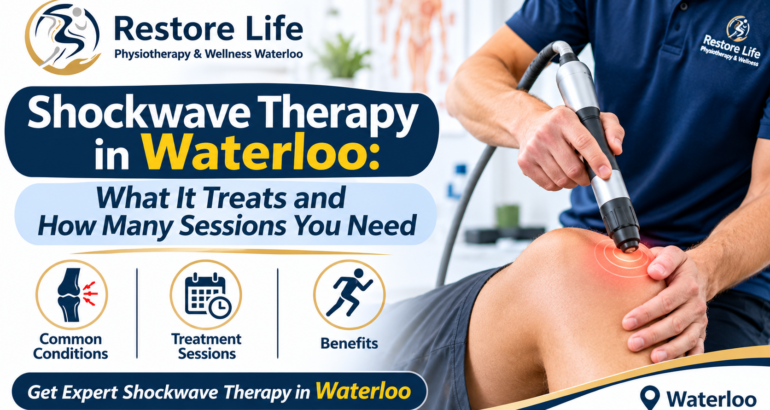
Shockwave therapy is a non-invasive treatment that sends acoustic pressure waves through the skin into an injured area. A small handheld applicator is placed over the sore spot, and the waves are delivered in short, rapid pulses.
These waves are believed to work in several ways:
- Increase blood flow to the injured tissue
- Stimulate the body’s natural healing response
- Reduce pain signals from the area
- Help break down stiff or scarred tissue
- Encourage tendon repair in areas that heal slowly
Tendons and some soft tissues have a limited blood supply, which is why they can take months to recover. Shockwave therapy gives these stubborn areas an extra push, so that healing can restart.
Conditions That Shockwave Therapy Can Treat
Shockwave therapy is most often used for long-standing tendon and soft tissue problems that have not responded well to rest, stretching or basic exercises. The conditions most commonly treated include:
- Plantar fasciitis. Heel pain that is worst with the first steps in the morning is one of the best-known reasons people try shockwave.
Achilles tendinopathy. Pain and stiffness at the back of the ankle, common in runners and people who are on their feet all day.
- Tennis elbow and golfer’s elbow. Pain on the outer or inner side of the elbow, often linked to repetitive gripping and computer work.
- Shoulder tendon problems. This includes rotator cuff tendinopathy and calcific shoulder pain.
- Hip pain. Gluteal tendon pain and trochanteric bursitis on the outside of the hip.
- Jumper’s knee. Pain at the front of the knee below the kneecap, common in athletes.
- Shin splints and other overuse injuries. Persistent lower leg pain from running or training.
- Tight muscle areas. Stubborn trigger points in the upper back, neck and low back may also respond when shockwave is used alongside manual therapy. If neck tension is also behind your headaches, read our guide to physiotherapy for headaches and migraines in Waterloo.
Not every painful area is suited to shockwave. A proper assessment is the only way to know whether it is the right choice for your problem.
Why Shockwave Works Best Alongside Physiotherapy
Shockwave therapy is not a magic fix on its own. It reduces pain and kick-starts healing, but it does not correct the reason the injury happened in the first place. If your heel pain is caused by weak calf muscles or poor foot mechanics, or your elbow pain comes from a workstation setup, the problem can return once treatment stops.
That is why the best results come when shockwave is combined with a full physiotherapy plan that includes:
- A detailed assessment of how you move and load the area
- Hands on treatment to release tight tissues
- Progressive strengthening exercises
- Advice on footwear, training load and daily habits
- A step-by-step return to work, sport or activity
At our Physiotherapy center in Waterloo, shockwave is used as one part of a wider plan, so you are not only getting relief but also fixing the cause. Many stubborn injuries start with an awkward landing, so our guide on slip and fall injuries in winter explains when a fall needs a physiotherapy assessment.
How Many Shockwave Sessions Will You Need?
This is the most common question we hear, and the honest answer is that it depends on your condition. As a general guide, many treatment plans involve a short course of weekly sessions, often in the range of three to six visits. Some people notice improvement after a few sessions, while others need a longer course.
Several factors affect how many sessions you need:
- How long you have had the problem. A recent injury often responds faster than one that has lasted for many months.
- The type of tissue involved. Tendons usually take longer to change than muscle.
- Your activity level. If you keep loading the area heavily, healing slows down.
- Your overall health and age. Circulation, diet and sleep all affect recovery.
- How well you follow your exercise plan. Strength work between sessions makes the results last longer.
Your physiotherapist will give you a clearer estimate after your assessment and will review your progress along the way. Improvement is often gradual, with the full effect building over several weeks after the final session.
What to Expect During a Shockwave Session
A typical visit is straightforward and does not need any special preparation.
- Assessment. Your physiotherapist reviews your history, checks the painful area and confirms that shockwave is suitable.
- Gel and applicator. A gel is applied to the skin and the applicator is placed over the treatment area.
- Treatment. You will feel a tapping or pulsing sensation. It can feel uncomfortable over very tender spots, but the intensity can be adjusted to suit you. Sessions are often quite short.
- Exercise and advice. Your physiotherapist will show you exercises and explain what to do and avoid before your next visit.
Most people can return to normal daily activities straight after treatment. Mild soreness or redness in the area for a day or two is common and usually settles on its own.
Who Should Not Have Shockwave Therapy?
Shockwave therapy is safe for most adults, but it is not suitable for everyone. Let your physiotherapist know if any of these apply to you:
- You are pregnant
- You take blood-thinning medication or have a bleeding disorder
- You have an infection or open wound in the treatment area
- You have a pacemaker or other implanted device near the area
- You have a tumour or suspected tumour in the area
- You have had a recent injection of cortisone into the area
Your physiotherapist will go through your health history before starting, so that treatment is safe and appropriate for you.
Shockwave Therapy Compared With Other Options
If you are not sure which treatment fits your problem, here is how shockwave compares with other common options:
- Rest and stretching often work for mild or recent pain but may not be enough for long-standing tendon problems.
- Exercise therapy is the foundation of recovery and should always be part of the plan.
- Laser therapy is another non-invasive option that supports tissue healing and pain relief. You can learn more about our laser therapy service.
- Massage and manual therapy relax tight muscles and improve movement. Our massage therapy team also offers physiotherapy massage in Waterloo, which works well alongside shockwave for tight, overworked areas.
- Back pain care is also useful when a sore low back comes with a tendon problem. See our back pain treatment page, or read how to avoid snow shoveling back pain this winter.
Your physiotherapist can combine these treatments so that each one supports the others.
Why Choose Restore Life for Shockwave Therapy in Waterloo
If you are looking for the best physiotherapy Waterloo has to offer, choosing a clinic that treats the whole picture matters more than any single machine. At Restore Life Physiotherapy & Wellness, you can expect:
- Licensed physiotherapists who assess before they treat
- A team of physiotherapists, massage therapists and chiropractors working together
- Personal treatment plans built around your condition and goals
- Convenient direct billing with many insurance providers
- A central location at 380 King Street North in Waterloo
- A top-rated clinic reputation, awarded by PainHero
You can read more about shockwave therapy in Waterloo on our service page, or book an assessment to find out if it suits you.
Frequently Asked Questions
Q. Does shockwave therapy hurt?
You will feel a pulsing or tapping sensation. It can be uncomfortable over very sore spots, but your physiotherapist can adjust the intensity so that it stays tolerable.
Q. How many shockwave sessions do I need?
Many plans involve around three to six weekly sessions, but this varies with your condition and how long you have had it. Your physiotherapist will give you a more precise plan after your assessment.
Q. How soon will I feel results?
Some people feel a difference after a few sessions, while others notice improvement gradually over several weeks. Tendon healing takes time, so patience and consistent exercise help.
Q. Is shockwave therapy safe?
It is considered safe for most adults when delivered by a trained professional. Mild soreness or redness afterward is common. People who are pregnant or take blood thinners should speak with their physiotherapist first.
Q. Can I exercise after a shockwave session?
Light activity is usually fine, but your physiotherapist may ask you to reduce heavy loading for a short time. They will explain what is suitable for your condition.
Q. Do I need a referral to book shockwave therapy in Waterloo?
In most cases, you can book directly with our clinic. Some insurance plans may ask for a doctor’s note, so it is a good idea to check your coverage.
Q. Is shockwave therapy covered by insurance?
Coverage depends on your plan. Please contact our clinic to confirm what is included and whether direct billing applies to your treatment.
Related Reading From Our Blog
- Snow Shoveling Back Pain in Waterloo: Causes, Prevention and Physiotherapy Treatment
- Slip and Fall Injuries in Winter: When to See a Physiotherapist
- Physiotherapy for Headaches and Migraines in Waterloo
You can find more guides on our health blogs page.
Ready to Find Out If Shockwave Is Right for You?
If pain has been holding you back for weeks or months, you do not have to keep waiting for it to disappear. A proper assessment can show whether shockwave therapy, exercise, massage or a combination of treatments is your best path forward. Our physiotherapists Waterloo residents trust are ready to help you get moving again.
Visit our home page to explore physiotherapy Waterloo services, or call 519-894-4602 to speak with our team. You can also book online and take the first step today.