
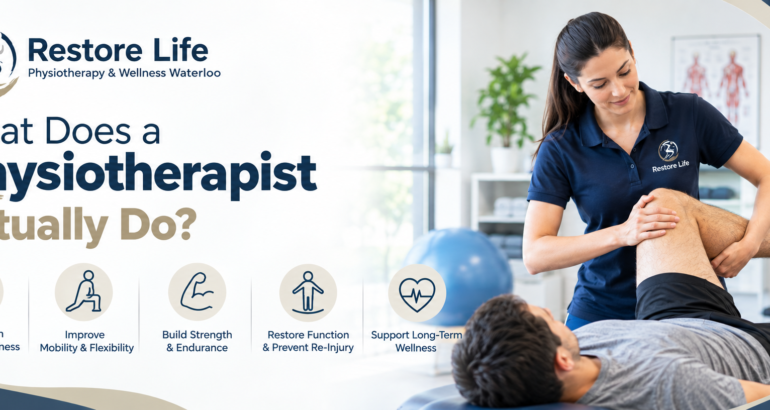
If you have been dealing with pain in your back, knee, neck, or shoulder for a while, someone has probably told you to see a physiotherapist. But many people are not sure what physiotherapy actually involves, what happens at an appointment, or whether it will really help.
This guide breaks it all down in simple terms. By the end, you will know exactly what physiotherapy in Waterloo can do for you, what to expect at your first visit, and how to find the right clinic for your needs.
What Is Physiotherapy?
Physiotherapy is a hands-on healthcare treatment that helps people recover from injuries, manage pain, and move better. A registered physiotherapist assesses your body, finds the root cause of your pain or movement problem, and builds a treatment plan to fix it.
It is not just about rubbing sore muscles. Physiotherapy treatment in Waterloo covers a wide range of conditions — from a sprained ankle to chronic back pain to recovery after surgery. Physiotherapists are trained to look at how your whole body moves and find the source of the problem, not just the spot where it hurts.
What Conditions Does Physiotherapy Treat?
One of the biggest reasons people avoid booking a physiotherapy appointment is that they are not sure if their problem qualifies. The truth is, physiotherapy helps with a much wider range of conditions than most people realize.
Here is what a skilled Waterloo physiotherapist can help you with:
Muscle and Joint Pain
- Back pain and lower back stiffness
- Neck pain and whiplash
- Shoulder injuries and rotator cuff problems
- Hip and knee pain
- Ankle sprains and strains
- Elbow and wrist pain
Sports Injuries
- Ligament tears and sprains
- Tendonitis and tendon injuries
- Muscle pulls and overuse injuries
- Recovery from athletic surgery
After Surgery
- Hip and knee replacement recovery
- ACL reconstruction rehabilitation
- Shoulder surgery recovery
Chronic and Ongoing Conditions
- Arthritis pain management
- Sciatica and nerve-related pain
- Posture problems from desk work
- Headaches caused by neck tension
Workplace and Accident Injuries
- WSIB claims and workplace injury recovery
- Motor vehicle accident (MVA) rehabilitation
- Ergonomic and workstation assessments
Other Conditions
- Concussion management
- Vestibular issues (dizziness and balance problems)
- Pelvic health concerns
If you are dealing with pain that limits what you can do in daily life, physiotherapy in Waterloo is worth trying. Most people do not need a doctor’s referral to book a private appointment.
What Happens at a Physiotherapy Appointment?
A lot of people put off booking because they do not know what to expect. Here is a simple breakdown of what your first visit to a physiotherapy clinic in Waterloo will look like.
Step 1 — Initial Assessment
Your first appointment is mostly about finding out what is going on. Your physiotherapist will ask you questions about your pain — when it started, what makes it worse, what makes it better, and how it affects your daily life. They will also look at how you move and do a hands-on physical assessment.
This step is important because treating the right thing matters. For example, knee pain can sometimes come from a problem in the hip or foot. A good physiotherapist does not just treat where it hurts — they find why it hurts.
Step 2 — Treatment Plan
After the assessment, your physiotherapist will explain what they found and what they recommend. They will tell you how many sessions you might need and what each session will focus on. A good treatment plan is specific to you — not a copy-paste program given to every patient.
Step 3 — Hands-On Treatment
This is where the actual work happens. Depending on your condition, your treatment at a Waterloo physiotherapy session may include:
- Manual therapy — hands-on joint and muscle work to reduce pain and improve movement
- Physiotherapy massage in Waterloo — targeted massage to release tight muscles and improve blood flow
- Exercise therapy — specific movements and stretches to build strength and prevent the injury from coming back
- Dry needling or acupuncture — thin needles used to release tight muscle knots
- Shockwave therapy — sound wave treatment for stubborn tendon and tissue injuries
- Ultrasound and electrotherapy — tools that help reduce swelling and speed up healing
- Taping — supportive taping for joints and muscles during recovery
Step 4 — Home Care Plan
Before you leave, your physiotherapist will give you a small set of exercises or stretches to do at home. This is one of the most important parts of recovery. What you do between appointments makes a big difference in how fast you get better.
Why Physiotherapy Works — The Science Behind It
Pain is your body’s way of telling you something is wrong. But pain does not always mean damage. Sometimes pain comes from muscles that are overworked, joints that are not moving properly, or nerves that have become sensitive from an old injury that never healed fully.
Physiotherapy works by addressing these root causes directly. Manual therapy restores normal joint movement. Exercise therapy strengthens the muscles that support injured areas. Education helps you understand why the pain is happening and what to change to stop it from coming back.
Studies have shown that physiotherapy is as effective as surgery for many common conditions like knee osteoarthritis, rotator cuff injuries, and lower back pain — without the risks, cost, or recovery time that surgery involves.
The key is consistency. Most people feel some relief after the first couple of sessions. But for lasting results, completing the full treatment plan your physiotherapists in Waterloo recommend is important.
Physiotherapy Massage in Waterloo — What Is the Difference?
You might wonder whether physiotherapy massage is the same as regular massage therapy. The short answer is no.
Regular massage is mostly about relaxation. Physiotherapy massage in Waterloo is a targeted, clinical treatment used as part of a broader rehabilitation plan. Your physiotherapist uses specific massage techniques — like deep tissue, myofascial release, and trigger point therapy — to treat a diagnosed condition and help you recover faster.
It is also often combined with other treatments in the same session — so you might get manual therapy, massage, and an exercise program all within one appointment. This combined approach is what makes physiotherapy more effective than massage alone for injuries and chronic pain.
Does Physiotherapy in Waterloo Require a Referral?
For private pay and most insurance plans, no referral is needed. You can book directly with a physiotherapy clinic in Waterloo and start your treatment right away.
If you are claiming through OHIP, a doctor’s referral is required. For WSIB (workplace injuries) or MVA (car accident) claims, a referral may also be needed depending on your insurer.
At Restore Life Physiotherapy and Wellness in Waterloo, our team can walk you through the process and help figure out how your sessions can be covered. We also offer direct billing to many insurance plans so you do not have to pay out of pocket and wait for reimbursement.
How to Get the Most Out of Your Physiotherapy Treatment
Getting better from an injury or chronic pain takes some effort on your part too. Here are a few simple things that make a real difference:
Show up consistently — Missing appointments slows your progress. Stick to the schedule your physiotherapist recommends.
Do your home exercises — The exercises your therapist gives you are not optional extras. They are a core part of your treatment.
Be honest about your pain — Tell your therapist when something hurts more, when it is getting better, and when a certain exercise does not feel right. This helps them adjust your plan.
Ask questions — You should understand what you are doing and why. A good physiotherapist will always take time to explain.
Be patient — Some conditions take a few weeks to improve. Stick with the plan and you will get results.
If you want more guidance on picking the right clinic or what to look for when booking your first appointment, read our guide on how to choose the best clinic for physiotherapy in Waterloo.
Why Choose Restore Life Physiotherapy and Wellness in Waterloo
At Restore Life Physiotherapy and Wellness, we are a trusted physiotherapy clinic in Waterloo located at 380 King St N, Unit 1. Our team of registered physiotherapists works with patients of all ages — from young athletes to seniors recovering from surgery.
Here is what makes us different from other physiotherapy clinics in Waterloo:
- No referral needed for private pay appointments
- Direct billing to most major insurance providers
- Personalized treatment plans — not the same generic program for everyone
- Multiple services under one roof — physiotherapy, massage therapy, custom orthotics, and chiropractic
- Languages spoken — English, Hindi, and Punjabi
- Flexible hours — open weekdays and Saturdays for working adults and families
- Tele-rehab available — online physiotherapy appointments if you cannot come in person
Whether you are dealing with a new injury, recovering from surgery, managing a chronic condition, or just tired of living with daily pain, our physiotherapists in Waterloo are here to help.
To learn more about what we offer and what sets our clinic apart, visit the full overview of our physiotherapy clinic in Waterloo and what we treat.
Book Your Physiotherapy Appointment in Waterloo
Getting started is easy. No referral is needed for most patients.
📍 380 King St N, Unit 1, Waterloo, ON N2J 2Z3 📞 519-894-4602 📧 restorelifephysio@gmail.com
Hours: Monday – Wednesday: 10:00 AM – 7:00 PM; Thursday – Friday: 10:00 AM – 6:00 PM; Saturday: 10:00 AM – 2:00 PM
Stop waiting for the pain to go away on its own. Book your appointment with our best physiotherapy Waterloo team today and take the first step toward moving and feeling better.
FAQ About Physiotherapy in Waterloo
Q: Do I need a referral to see a physiotherapist in Waterloo?
No. For private pay and most insurance plans, you can book directly without a doctor’s referral. A referral is only needed for OHIP-funded physiotherapy.
Q: How many physiotherapy sessions will I need?
It depends on your condition. Some people feel better in 3 to 5 sessions. Others with chronic pain or post-surgery recovery may need 8 to 12 sessions or more. Your physiotherapist will give you a clear estimate after your first assessment.
Q: Is physiotherapy covered by insurance in Waterloo?
Most extended health care plans in Ontario cover physiotherapy. We offer direct billing at our Waterloo clinic so you do not have to pay and wait for reimbursement.
Q: What is the difference between physiotherapy and chiropractic?
Both treat pain and movement problems but use different methods. Physiotherapy focuses on exercise, manual therapy, and rehabilitation. Chiropractic focuses more on spinal adjustments. Many patients benefit from both — and we offer both at our Waterloo clinic.
Q: Can physiotherapy help with chronic pain?
Yes. Physiotherapy is one of the most effective long-term solutions for chronic pain. It addresses the cause of the pain rather than just masking it, which leads to better results over time.
Q: What should I wear to a physiotherapy appointment?
Wear comfortable, loose clothing that allows your therapist to access the area being treated. For knee or hip treatment, shorts are helpful. For shoulder or neck treatment, a loose top works well.